Thursday, 11 April 2013

Pagaruyung Kingdom 1500-1825


Rumah Gadang, Bukit Tinggi, Sumatera Barat, Indonesia
Photo by Noraini Ismail (classmate, MGHS 1972/73)

There were many kingdoms in our history. One of them was the Pagaruyung Kingdom. Pagaruyung is also spelled as Pagarruyung, Pagar Ruyung, and was also known as Malayapura and Malayupura. At least one of the early Malay doctors' ancestors were traced to the Pagaruyung Kingdom - Dr Megat Khas bin Megat Omar. Dr Raja Ahmad Noordin bin Raja Shahbudin's ancestors were traced to the Siak Sultanate, a subgroup of the Pagaruyung Sultanate that was formed following the Padri war that occurred in West Sumatera at the height of the Dutch invasion there.

What is the Pagaruyung Kingdom?
http://en.wikipedia.org/wiki/Pagaruyung_Kingdom

Spread of Islam in South-east Asia was between 1200 and 1600.
Samudera Pasai Sultanate existed between 1267 and 1521.
Majapahit Kingdom existed between 1293 and 1500.
Malacca Sultanate existed between 1400 and 1511.
Cirebon Sultanate existed between 1445 and 1677.
Demak Sultanate existed between 1475 and 1548.
Aceh Sultanate existed between 1496 and 1903.
Pagaruyung Kingdom existed between 1500 and 1825.

The Pagaruyung Palace was where the Minangkabau kings once lived. The wooden palace was razed to the ground 3 times. The palace was re-built after each fire. At the time of the Dutch conquest of West Sumatra (after the third fire), there was hardly any remains of Pagaruyung Palace - just the palace grounds remained.

Why was the Pagaruyung Palace burned? Why did they burn down Pagaruyung Palace? Was it arson? Was is because of some family feud? Was it because of differences in ideologies of the rulers? What happened in Pagaruyung Palace history?

Minangkabau tradition upholds female domination and rights to family heirlooms and possessions, including land rights. The Minangkabau tradition is deemed as 'unIslamic' when it comes to inheritance. When the 'padri' of Islam (actually daie or preachers of Islam) came to Pagaruyung Palace from Aceh to spread Islam, not all the Pagaruyung royal household accepted Islam. After much rift on the differences in the lifestyles and traditions (Minangkabau vs. Islam), Pagaruyung Palace household was split. The ones who remained (victors) continued their Minangkabau tradition. The ones who sided Islam (losers) denounced their royal titles and left the palace; they moved south to the fishing ports and sailed to Malaya. They wandered to Perak and Pahang and had families in various parts of Malaya.

Stamford Raffles came into the picture when the Dutch ordered him to see the troubles at Pagaruyung. There was nothing on site since the palace was already gone and the royal household was split.

What is there today at Pagaruyung?

A triple-storey Pagaruyung Palace was constructed on the old site. However, lightning struck and it was razed to the ground. Another replica palace stands on the old palace site for tourists to view. The place is now Pagaruyung village in Tanjung Emas subdistrict, perched in the highlands of Tanah Datar regency, and the nearest town is Batusangkar in Indonesia.

The Pagaruyung Palace royal household in West Sumatra has ceased to exist. However, lineages of the fragmented royal families of the Pagaruyung Palace and the latter Siak Sultanate can be traced in Malaysia - in Perak, Pahang and Malacca. These link to the famous Nakhoda who first opened Penang island (before Captain Francis Light) and founded Masjid Batu Uban in Kampung Melayu Batu Uban in 1734, and his brother-in-law, Datuk Jenaton who defended Kedah against Siamese attack in the late 1800s, and was given a large track of land, on which stands the Universiti Sains Malaysia (USM) main campus in Penang, and the adjacent Minden Heights housing scheme.

External links:
https://www.youtube.com/watch?v=sO9WkdC8B7U
https://www.youtube.com/watch?v=Hr_2DNikPp4
https://www.youtube.com/watch?v=tNMM7zZfD60

Friday, 29 March 2013

Masjid Banda Hilir 1820 (2)

Masjid Bandar Hilir diasaskan oleh Dato Shabuddin bin Hj Mohd Amin pada 1820 Masihi. Beliau berasal dari Cirebon, Tanah Jawa, Indonesia.

Dato Shahbuddin meninggal dunia dan dikebumikan di Makam Shahbudin, Jalan Panjang, Qariah Banda Hilir, Jalan Laksamana Cheng Ho, Melaka.

Anaknya Inchek Nyonia bt Sheikh Mohd Sahabudin berkahwin dengan Ismail. 

Ismail berasal dari Yaman (Yemen). Beliau seorang yang handal sebagai pelayar, saudagar, pedagang, dan peniaga batu permata di kawasan berhampiran Masjid Kapitan Kling di George Town, Pulau Pinang. Ia dikenali sebagai Ismail Alyamani atau Ismail Yamani. Mungkin juga beliau ,berkhidmat sebagai engineer bagi kapal dagang British yang berlayar dari Yaman ke Tanah Melayu dan berlabuh di Pulau Pinang dan Melaka.

Mereka dikurniakan 3 orang anak lelaki iaitu Hj Mohd Sharif bin Ismail, Hj Noordin bin Ismail dan Zainal (Zenal) bin Ismail.

Pada mulanya, Hj Mohd Sharif membuat dan menjual gula Melaka / gula kabung (jaggery) yang dimasak di perkarangan rumahnya bersebelahan Masjid Banda Hilir. Setelah kembali dari mengerjakan Haji pada 1896, beliau menjalankan perniagaan saduran emas yang diperlajarinya semasa di Makkah. Beliau berniaga emas selama 10 tahun dan mempunyai 4 buah bangunan rumah/rumah kedai in Taman Melaka Raya iaitu di No 76 Banda Hilir, No 77 Banda Hilir, No 111 Banda Bilir dan No 113 Banda Hilir. Kini nama jalan telah ditukarkan kepada Jalan Parameswara. . Beliau juga menjadi Imam Masjid Banda Hilir pada zamannya. 

Antara mereka yang hidup sezamannya ialah Mohamad Saleh bin Khatib Usuf. Namanya nyatakan dalam Wasiat Hj Mohd Sharif bertarikh 1906. Anak2nya ialah Omar dan Hj Ashari.

Dua orang saksi (witnesses) bagi Wasiat Hj Mohd Sharif pada 1906 ialah Zainal bin Omar (Sidang) dan Omar bin Saleh (Bilal).

Selepas kematian Hj Mohd Sharif, adiknya Hj Noordin menggantinya sebagai Imam Masjid Banda Hilir. Hj Noordin dan adiknya Zainal (Zenal) membantu menjaga dan membesarkan 5 anak2 arwah Hj Mohd Sharif selepas ketiadaannya.

Seterusnya Hj Noordin diganti oleh Hj Ashari bin Mohd Salleh.

Seterusnya, Hj Ahmad bin Awal mengganti Hj Ashari.

Seterusnya Hj Jaafar b Hj Ashari menjadi Imam ke-5 Masjid Banda Hilir selepas Hj Ahmad bin Awal.

Selepas itu Masjid Banda Hilir diambilalih dan menjadi masjid di bawah kelolaaan Kerajaan Malaysia dengan imamnya tidak lagi datang dari keturunan Dato' Shahbuddin tetapi dilantik.

Maka tiada lagi imam dari keturunan Dato' Shahbuddin menjawat pekerjaan sebagai imam di masjid ini.

Hj Mazlan bin Hj Abdul Rahim ialah cucu Hj Noordin bin Ismail.

Hj Salleh bin Mohd Yusope ialah cucu Hj Mohd Sharif bin Ismail.

Hj Mazlan dan Hj Salleh adalah dua pupu.

Masjid Banda Hilir yang asal (1820) berupa madrassah kecil tempat belajar al Quran, dengan anak2 Hj Mohd Sharif mengajar al Quran pada penduduk sekitar Kg Banda HIlir dan kampung2 berhampiran. 

Dinding masjid dibom dan musnah semasa Perang Dunia Kedua dan dibina semula selepas perang.

Status madrassah ini kekal hingga 1960-an sebelum ia menjadi masjid. Masjid ini dibesarkan dengan membina kaki lima di bahagian masjid paling hampir dengan rumah Hj Mohd Sharif.

Kawasan Masjid Banda Hilir seluas 1 ekar telah diwakafkan dan rumah2 yang wujud dalam perkarangan tanah wakaf menjadi rumah abu. Ini bermaksud rumah2 yang sedia ada bukan milik persendirian dan tidak boleh diniagakan (dijual).

Antara rumah yang wujud setelah Hj Mohd Sharif meninggal dunia ialah rumahnya sendiri (262-T Banda HIlir), rumah Inchek Sarah (cucu Hj Mohd Sharif), rumah Asiah (anak Hj Mohs Sharif) dan bangunan batu yang dibina oleh pihak Masjid bagi Hj Abdul Rashid (cucu Hj Mohd Sharif). Ketiga2 mereka ini telah pun meninggal dunia. 

Inchek Sarah bt Mohd Yusope (Mak Sarah) dikebumikan di Nilai. 

Asiah bt Hj Mohd Sharif (Nek Ya / Ya Tampin) meninggal pada 28 April 1984 dan dikebumikan di Kubor Jalan Panjang, Melaka.

Hj Abdul Rashid bin Mohd Yusope meninggal pada 8 Mac 2009 dan dikebumikan di Masjid Jamek Gelugor, Gelugor di Pulau Pinang.

Thursday, 28 March 2013

Jelutong Press

Jelutong Press which was owned by Syed Sheikh Al-Hadi was located at 555 Jelutong Road in Jelutong, Penang.

Jelutong Press is important because it was an early Malay press in Malaya. It published books on Malay fiction based on foreign folklore, Turkish, Arabic or Egyptian.

I have listed Syed Sheikh Al-Hadi's publications elsewhere on the Internet.

(٠‎ - ١‎ - ٢‎ - ٣‎ - ٤‎ - ٥‎ - ٦‎ - ٧‎ - ٨‎ - ٩‎)

Update 3 September 2013:

In 1919, Syed Sheikh shifted to Penang and lived at 410 Jalan Jelutong (main street), near the Esso petrol station. Syed Sheikh’s residence in Penang was close to Masjid Jamek Jelutong, in Mukim Jelutong. A tram line ran on Jalan Jelutong. The tram line has been removed. Jalan Jelutong is a busy and congested road today. Syed Sheikh's residence is now a Chinese temple run by vegetarian nuns who cook and giveaway food to the poor. The Penang Heritage Trust (PHT) has informed at the Penang and Hajj 2013 conference, that it will try and buy back or repossess the house for history's sake and for Syed Sheikh's repute as a foremost radical movement fighter for Islamic reform way back then. Syed Sheikh's stand on Islamic reform is used everywhere in Malaysia today.

(٠‎ - ١‎ - ٢‎ - ٣‎ - ٤‎ - ٥‎ - ٦‎ - ٧‎ - ٨‎ - ٩‎)

Syed Sheikh’s eldest son, Syed Alwi al-Hady’s family lived across the road at 431 Jelutong Road, Penang.

(٠‎ - ١‎ - ٢‎ - ٣‎ - ٤‎ - ٥‎ - ٦‎ - ٧‎ - ٨‎ - ٩‎)

Prof. Eric Tagliacozzo’s hajj abstract booklet which was distributed at the Penang and Hajj 2013 conference at the E&O Hotel in Penang, 17-18 August 2013 is a useful resource on history of the hajj pilgrimage.


Prof. Eric Tagliacozzo’s hajj abstract booklet (page 18) featured a small image of a hajj booklet with the caption: Alwee bin Syeikh Abdul Hadi, Penerangan, Teguran dan Nasihat Atas Pelayaran Naik Haji ke ‘tanah suci’, 431 Jelutong Press, Pulau Pinang.

The hajj booklet featured on page 18 was authored by Alwi bin Sheikh Alhady and was published by Jelutong Press, with an image of the Kaabah on the front cover. The caption in Prof. Eric's booklet indicates that Jelutong Press was extant at 431 Jalan Jelutong.


(٠‎ - ١‎ - ٢‎ - ٣‎ - ٤‎ - ٥‎ - ٦‎ - ٧‎ - ٨‎ - ٩‎)

Another photo from Arkib Negara Malaysia showed that most probably Jelutong Press was annexed to Syed Alwi al-Hady’s house at 431 Jalan Jelutong. Jelutong Press at 431 Jalan Jelutong would be on the opposite side of the road compared to Syed Sheikh’s al-Hadi's residence. It could be 20 houses or doors farther down the road on Jalan Jelutong (towards the Chinese clan jetties).

(٠‎ - ١‎ - ٢‎ - ٣‎ - ٤‎ - ٥‎ - ٦‎ - ٧‎ - ٨‎ - ٩‎)

Jelutong Press ceased to function just before WWII. The reason for its closing is unknown and neither did Syed Alwi or Dr SMA Alhady mention the reasons why in the accounts of the family in the book The Real Cry of Syed Sheikh Alhady. It could be due to the high cost of lithography printing (newsprint and ink) as WWII already broke out in Europe in 1939. In addition, shipping routes to South Asia, Southeast Asia, and the Far East via the Suez Canal were controlled by the army. This could have affected shipping of printing materials.

(٠‎ - ١‎ - ٢‎ - ٣‎ - ٤‎ - ٥‎ - ٦‎ - ٧‎ - ٨‎ - ٩‎)

I read somewhere that Jelutong Press has been demolished and now a paint shop stands on site. It will be worth to search for the site at 431 Jalan Jelutong and to look it up in old maps and booklets of the late 1920s- early 1930s.

(٠‎ - ١‎ - ٢‎ - ٣‎ - ٤‎ - ٥‎ - ٦‎ - ٧‎ - ٨‎ - ٩‎)

Possible Jelutong Press site in 2021 (based on Google Map)

There is just a big empty parking lot with some old houses with zinc roofs at one periphery.

Two roads border the house site - Jalan Jelutong and Jalan Ahmad Nor. 

Jelutong Press occupied a building in the middle. It was taken over by Hurp Seng Hong Trading, 555 Jalan Jelutong. Both have been demolished.
--
Here is a list of shops on Jalan Jelutong. The shops are scattered and are not properly numbered.

== Jalan Madrasah 

Kedai Kopi Lum Kah, 595 Jalan Jelutong, Jelutong (corner shop, should be 593, 595)

Poh Hin Pawnshop, 595 Jalan Jelutong, Jelutong (should be 591)

577-589 are missing shops (they don't exist).

Noorjahan Mini Market (convenient store), should be 575

Lorong kosong - ?
1 small gerai or shack - should be 573

Kedai Emas Fatt Meng, should be 571

The Rice (Chinese shop), should be 569

Ali Ameir Nasi Kandar, 567 Lebuhraya Gelugor, Jelutong, 11600 George Town, Pulau Pinang

== Jalan Pokok Asam

Jalan Pokok Asam (enrance from Jalan Jelutong) is now closed off by the Khye Sian Ong Temple.

Khye Sian Ong Temple (celebrating 200 years heritage in Jelutong) = 1819-2019. This temple replaced a house which once stood on the site on Jalan Pokok Asam. There was a tiny road (Jalan Pokok Asam) leading to the houses at rear.  

Actstreet Realty (demolished)

555-563 is a large empty parking lot with old zinc houses at periphery)

Location of Jelutong Press at 555 Jalan Jelutong, Jelutong (now empty parking lot): 

Hurp Seng Hong Trading, 555 Jalan Jelutong
former Jelutong Press, 555 Jalan Jelutong, established in 1919-1934 (demolished).

This Nippon paint shop has moved to a new location in Jalan Perak:
Hurp Seng Hong Trading, 376 D & E Jalan Perak, Taman Continental, 11600 Jelutong, Pulau Pinang.

Yong Leng Motor (demolished)

Vaja Curry House, 537 Jalan Jelutong (demolished)

NC Tech Precision Solution Sdn Bhd (auto parts store) (demolished)

Highly Sdn Bhd (demolished)

== Jalan Ahmad Nor, Jelutong

Map of Jelutong and location of Jelutong Press.


Monday, 3 December 2012

Rumah Banda Hilir (6)

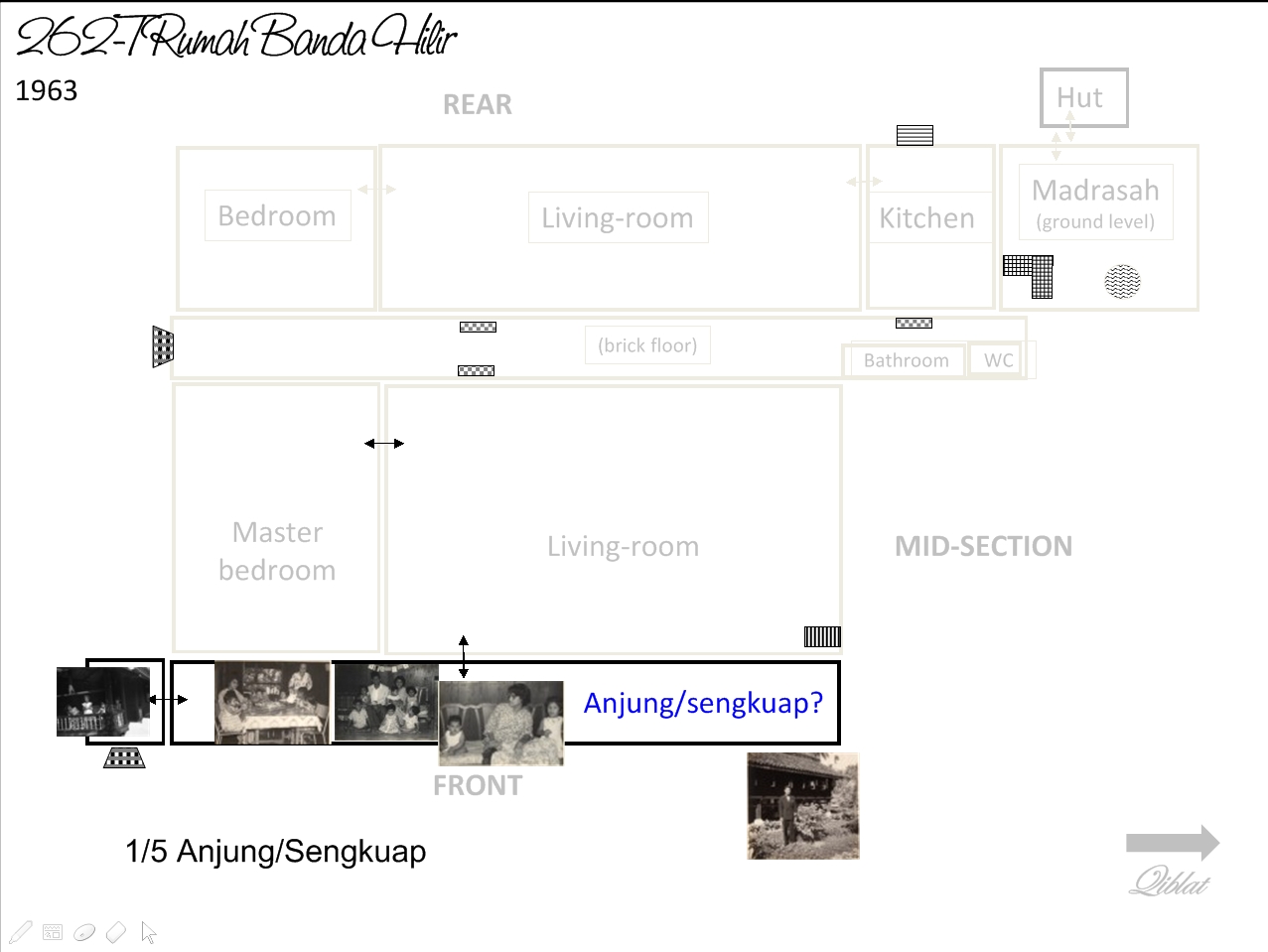
I have sat down to draw the interior of the house and added photos where they were taken (guessed and based on memory). I have tried to add icons to enliven the sketches of the interior and spaces. This is all from my past. The house has been demolished and there is nothing else to go by to draw these pictures.


Anjung (front guest space, mainly for males after prayers)

Front inner living-room for formal guests

Master bedroom where I slept with my parents till age 4-5

Brick multipurpose space for drying clothes, kids to play, preparing for festivities, etc. Goods are also placed here before they are sorted and separated into smaller tin cans for storage.

Rear living-room where relatives gathered to help out with festivities, etc. Doubled up as sleeping space when they were too many relatives in the house.

Sunday, 2 December 2012

Rumah Banda Hilir (5)

262-T Rumah Banda Hilir still excites me. I have sat down to draw the interior architectural plan of the house. This house was probably of Minangkabau exterior and interior layout.

Entrance viewed from across the main road, circa 1963.

House viewed from the main entrance, circa 1963.

This is how I have the house in my mind. This map shows the location of the house wrt the other known structures in Banda Hilir when I lived there.

Interior floor plan of the house from the time I was born up till before the toilet was made. We used the jamban outside the house. It was some distance from the main house. The pong was terrible, coming from the excreta in the pail beneath the stall (squatting type). It was like living on top of a cesspit. There were 2 bedrooms, a master bedroom in the newer section and a smaller bedroom in the older (ancient) back section of the house.

Interior floor plan after a toilet was made inside the house. Life was much better with a toilet inside the house. I slept with my parents in the master bedroom till I was past 4 years old. I slept in my eldest brother's big blue cot which was as big as a single bed.