Tuesday, 16 April 2013

Mohd Saleh bin Mohd Yusope

Full name: Mohd Saleh bin Mohd Yusope
Call name: Bapak called him Saleh. I called him Pak Saleh.
DOB: 1944

Pak Saleh was born in 1944, during WWII. According to Mak, as there was no milk during the war, he was fed tea.

Pak Saleh and his elder brother Pak Din grew up with me and my sibs at Rumah 262 Banda Hilir in Malacca. Pak Din was 22 and Pak Saleh was 18 when I was 4 in 1962. My youngest brother Amin was born in 1962.

Pak Saleh helped to look after the guinea pigs and fed them. They were housed at the rear, in a makeshift cage outside the main house, before Mak Sarah's house (before Nenek Yah's house was built).

When Pak Saleh and Pak Din were working, they both went to live in Kajang. They bought terraced houses and a rubber estate in Kajang. I went to Pak Din's Kajang house once. It was a small house.

Pak Saleh and Pak Din signed my MARA scholarship application form so I could go overseas to study in Califronia in 1976.

Pak Saleh worked as an audit in Keretapi Tanah Melayu (KTM), which later became Keretapi Tanah Melayu Bhd (KTMB). He retired as chief audit KTMB in 1999 (aged 55).

I often met him at Mak Bedah's house in Petaling Jaya (PJ). Every time I saw him, he had more white hair and a stressful face. Mak said these features were because he had a hard life as a baby (he was brought up on tea instead of milk formula or breastmilk). Lack of proper nutrition when young led him to age faster. But Pak Saleh was a friendly person.

I don't know what Pak Saleh did after retirement.

Pak Saleh married Mak Cik Zahrah and they first lived in Sentul. Later, they lived in Gombak.

(٠‎ - ١‎ - ٢‎ - ٣‎ - ٤‎ - ٥‎ - ٦‎ - ٧‎ - ٨‎ - ٩‎)

Pak Saleh has 3 pretty and intelligent married daughters - Norhafizah @ Pipi (Facebook), Nur Suhaila @ Ila (Facebook) and Nurul Akmar @ Nurul (Facebook). Pak Saleh loved his daughters dearly.

(٠‎ - ١‎ - ٢‎ - ٣‎ - ٤‎ - ٥‎ - ٦‎ - ٧‎ - ٨‎ - ٩‎)

Pak Saleh, Mak Cik Zahrah and his 3 daughters came to my wedding in Penang in June 1983. We sat down to eat Sahur together as I got married in Ramadan.

(٠‎ - ١‎ - ٢‎ - ٣‎ - ٤‎ - ٥‎ - ٦‎ - ٧‎ - ٨‎ - ٩‎)

Bapak leading prayer at Pak Din's house. Pak Saleh is seated behind him (plain blue shirt). Pak Din is seated next to Pak Saleh.
Mak Cik Zahrah (left) and Mak at Pak Din's house in Cheras.
Siblings: Standing from left - Che Nah (Zainah) and Mak Bedah (Che Bedah).
Seated from left: Pak Din , Bapak, and Pak Saleh.
(٠‎ - ١‎ - ٢‎ - ٣‎ - ٤‎ - ٥‎ - ٦‎ - ٧‎ - ٨‎ - ٩‎)

Second cousins. Haji Mazlan bin Haji Rahim (cucu Hj Nordin) and
Pak Saleh bin Mohd Yusope (cucu Hj Mohd Sharif) (right). Their fathers are first cousins. Their grandfathers are brothers.
(٠‎ - ١‎ - ٢‎ - ٣‎ - ٤‎ - ٥‎ - ٦‎ - ٧‎ - ٨‎ - ٩‎)

I met Pak Saleh again at Pelangi Mall when he came to Kota Bharu for Nurul's wedding to a Kelantan boy. We attended Nurul's wedding reception in Tanah Merah, Kelantan.


Pak Saleh checking my book on The Early Malay Doctors
Sambil makan dan sembang, check buku

Baharudin bin Mohd Yusope 1940-2006

Baharudin bin Mohd Yusope
@ Pak Din
1940 - 2006

Full name: Baharudin bin Mohd Yusope
Call names: Bapak and Mak called him Badin. I called him Pak Din.
DOB: 14 June 1940
Deceased: 18 August 2006

Wife: Fatimah binti Abd Ghani
Call names: Mak called her Fuzi. I called her Mak Cik Fauziah.
DOB: 24 February 1945
Deceased: 8 April 2011
Daughter: Nooraini (Noni)
DOB: 25 June 1971

Fatimah bt Abd Ghani
@ Mak Cik Fauziah / Fuzi
1945 - 2011

Children: 3 - girl, boy, girl (deceased at young age)

My story

I called him Pak Din. He was Bapak's younger brother (before Pak Saleh). Pak Din and Pak Saleh grew up with me and my sibs at Rumah 262 Banda Hilir in Malacca.

Pak Din and Pak Saleh helped to look after the guinea pigs and fed them.

Later Pak Din attended night classes (English?). We were living in Sabah at the time.

Then Pak Din worked for Tun Hussein Onn as his private secretary.

When Pak Din worked for Tun Hussein Onn, there were Parliament meetings. Pak Din's wife, Mak Cik Fauziah cooked meals for Parliament meetings, etc. She was a good cook. We didn't have Master Chef TV program at the time or she would be on TV.

When I went overseas in 1976, Pak Din gave me a green velvet sejadah (prayer mat). Pak Din and Pak Saleh signed my MARA scholarship application form as guarantors.

Pak Din was Malaysia's Consular in Phnom Penh, Cambodia in the 1970s. He left me a bag and a pretty orange cloth with Mak in Penang. Mak made me a pretty orange blouse with the cloth. I also took a photo of the pretty blouse.

Pak Din and Mak Cik Fauziah came to my wedding in Penang in June 1983. Mak Cik Fauziah was very helpful. She made a Malay kuih for me. She said Malay weddings have this delicacy. I think it was kuih talam ubi keledek (pengenan kacau) and she topped it with a glazed cherry. I ate the cherry.

I don't know what Pak Din did after he retired. He became involved with some religious activities.

Pak Din came one day to our house in Kubang Kerian. At the time he was in PAS. He came for the Muktamar PAS in Kelantan. I can't remember what year but it was before his daughter Noni got married. We had all gone to bed when Pak Din arrived late past midnight. Pak Din slept in the car till the next morning. Pak Din said he knocked on the door but everyone was fast asleep and he had nowhere to sleep except in his car.

Pak Din came again to Kelantan with Mak Cik Fauziah to shop for Noni's wedding preparation. They bought a lot of pretty plastic flowers from Rantau Panjang. I did not attend Noni's wedding but Mak and Minah told me it was a lovely wedding.

In loving memory of a loving couple, my uncle Pak Din and his wife Mak Cik Fauziah. Photo from Noni in FB.
Mak Cik Fauziah carrying Noni. Photo from Bapak's pendrive.
Pak Din when he served as the Malaysian Consular in Cambodia in the 1970s.
I was in California 1976-1982. Photo from Noni in FB.
Pak Din is in the middle.
From Abang Sharif (25 April 2012): In pink dress is Maimunah aka Mak Besar/Habsah anak Tok Ali Kedah.
Pak Din (left) and Tok Idris at Pak Din's govt quarters in KL. June 1987.
From Abang Sharif (25 April 2012): Pak Din & Tok Idris rumah Pak Din - double-storey govt quarters KL.
My father Abdul Rashid bin Mohd Yusope (Bapak) as Imam, leading prayer at rumah Pak Din in Cheras Batu 10. The makmum were his brothers Pak Din (striped shirt and kain pelikat), Pak Saleh and (possibly) my brother Amin. Photo from Bapak's collection.
Children of Mohd Yusope bin Hj Mohd Sharif. These are 5 siblings.
Seated from left are brothers: Pak Din, Bapak and Pak Saleh.
Standing from left are sisters: Che Nah (Zainah) and Mak Bedah.
Mak Cik Zahrah (isteri Pak Saleh) with Mak at Pak Din's house in Cheras.
From left: Mak Bedah, Pak Din and Mak.
Noni anak Pak Din & Mak Cik Fauziah

Tuan Sheik Mohamad Sahabudin

Tok Hj Mohd Sharif's mother is Inche Nyonia binte Tuan Sheik Mohamad Sahabudin. Who is Tuan Sheik Mohamad Sahabudin? What is his full name? Where was he from? Was he from Tengkera (Tranquera)? Was he an imam of any masjid? Was he an Indian?

Saturday, 13 April 2013

Cirebon Trails and Kuningan

Cirebon comes from 2 words - chai river and rebon (geragau, shrimp). Cirebon is a fishing port in West Java (Jawa Barat) and is famous for fish and shrimps (Kota Udang) in addition to batik and kaca tulis.

There is a main mosque (Masjid Besar Cirebon) and an ancient mosque (Masjid Trusmi, dated to 1500s). Trusmi village is also famous for batik. The awan mega mendung (stormy clouds) motif with Chinese details are characteristic of Cirebon batik.

In Kasepuhan village, there is a grand palace called Keraton Kasepuhan, in Cirebon city centre. It is regarded as the oldest keraton in Cirebon. However, there is another old palace nearby, Keraton Kanoman. The entrance to Keraton Kasepuhan has 2 white lions which are symbols of Prabu Siliwangi's pride. Keraton Kasepuhan is in Cirebon city centre, in Kasepuhan village. Gamelan  music dominates at palace performances in Cirebon. The most famous piece is the Gong Sekati or Sekaten, which is played twice a year. The marketplace, Pasar Kanoman is near Keraton Kanoman.

Approximately 5 km north of Cirebon city, towards the beach, is Astana Sunan Gunung Jati which houses the royal graves of Gunung Jati on its hill slopes. There are mausoleums (makam) behind the pavillion which only the sultan will open to visitors. Otherwise the mausoleums are closed to visitors. The locals come together during festivities to relive the story of a shipwreck where many died and were buried here.

Kuningan is a small town in the southern suburb and is cooler compared to Cirebon. It has the Sangkan Hurip hot springs and the historical Linggardjati building (Gedung Naksa). It was at this Linggardjati building where The Netherlands signed The Linggardjati Treaty with the Indonesian authorities, and the Republic of Indonesia (RI) was born in 1947. The hills lead to Mt Ciremai, the nearest volcano, and rice terraces cover its slopes. It is called Kuningan, maybe due to the yellow sulphur deposits found on the slopes near the volcano. This volcano is still active and it last erupted in 1951. There must be plenty of pokok cermai, ceremai or ciremai here near Mt Ciremai.

External links
http://gimonca.com/indonesia/cirebon.html
http://www.maplandia.com/indonesia/jawa-barat/kodya-cirebon/cirebon/
http://www.virtualtourist.com/travel/Asia/Indonesia/West_Java_Province/Cirebon-1220562/TravelGuide-Cirebon.html
http://en.wikipedia.org/wiki/Mount_Cereme

Friday, 12 April 2013

Masjid Banda Hilir 1820 (4)

RENOVATED MOSQUE 2007


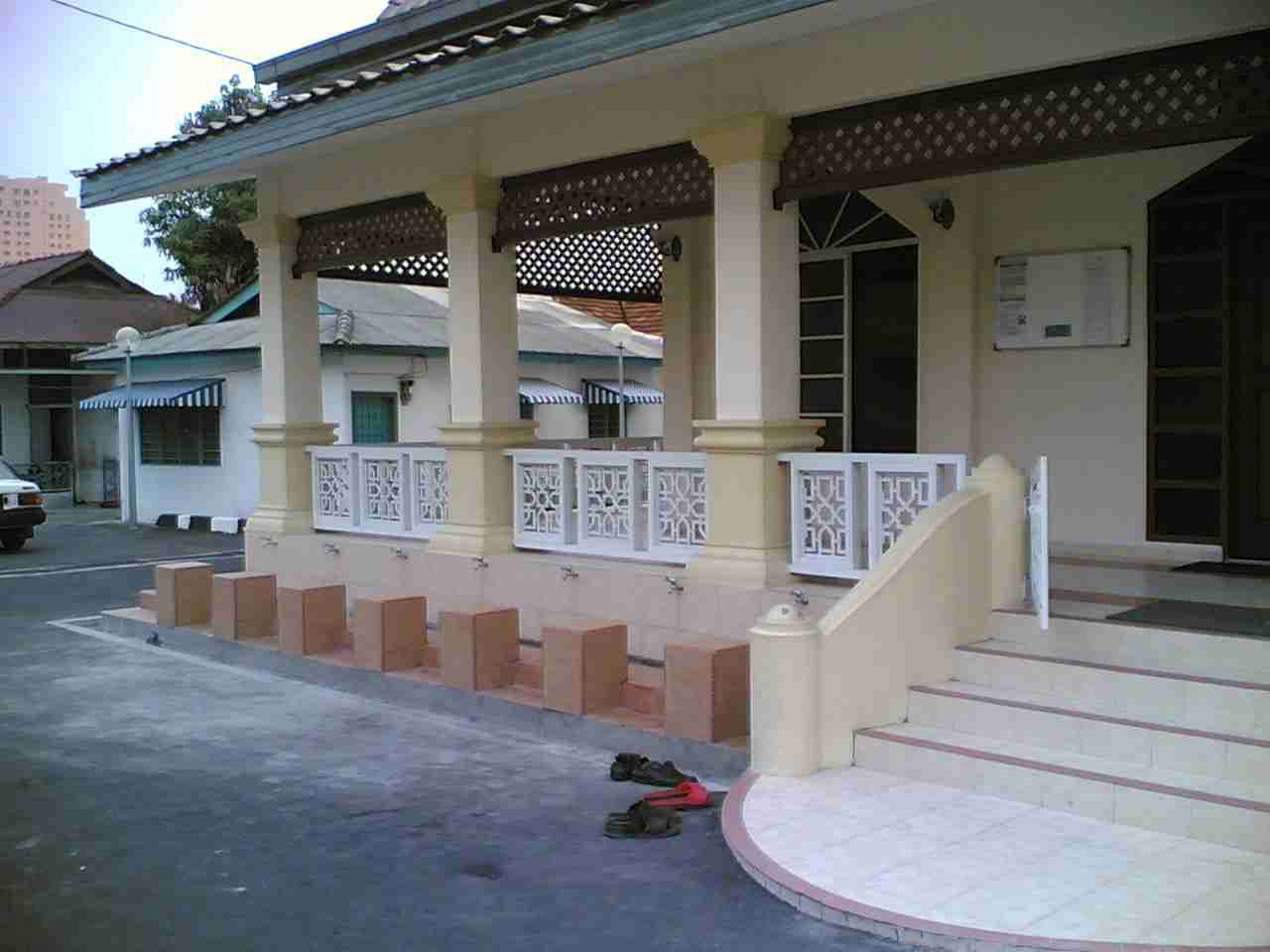
New porch built in 2007
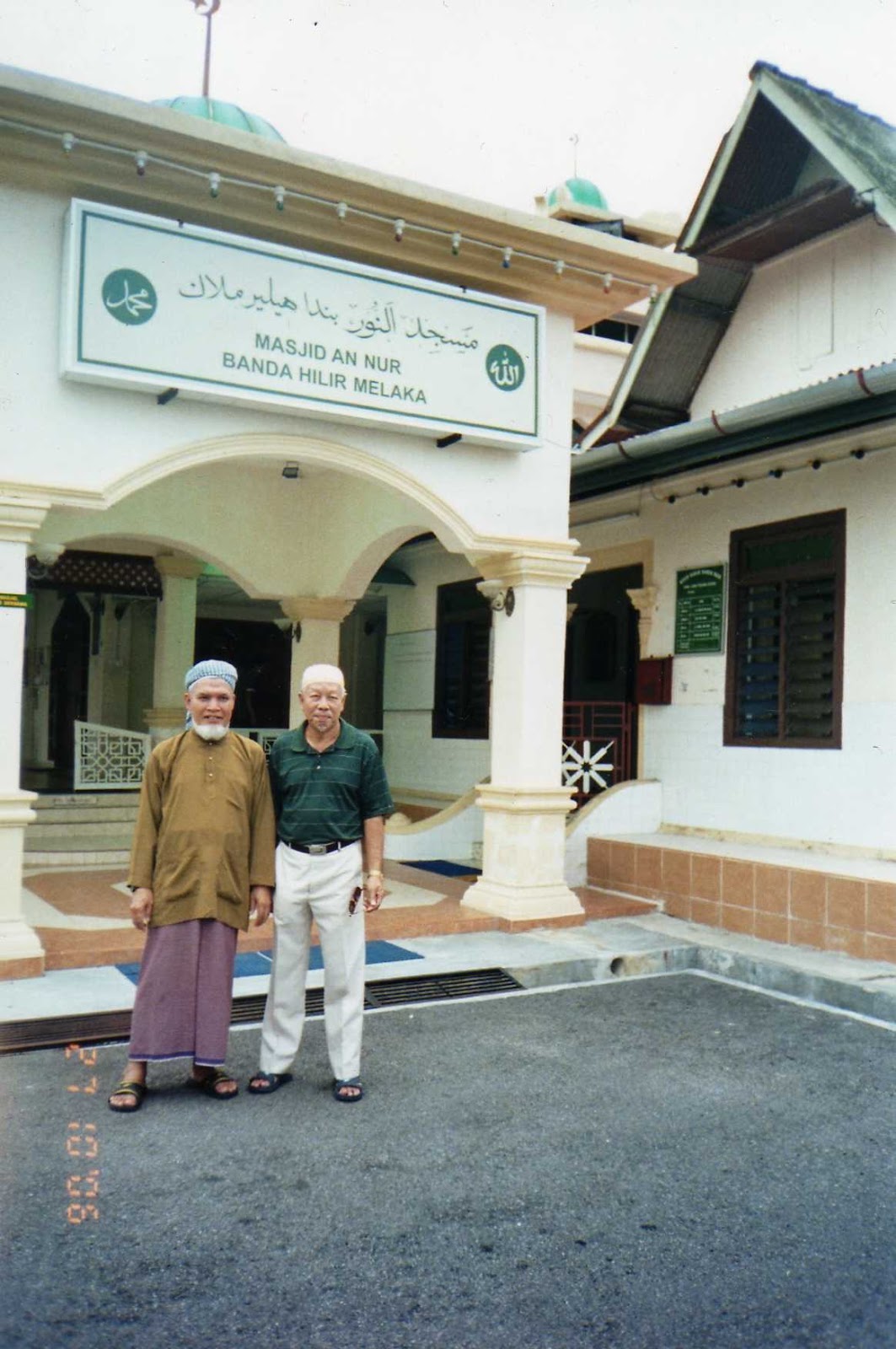
Haji Mazlan bin Haji Abdul Rahim (left) with Pak Saleh bin Haji Mohd Yusope (adik bongsu Bapak).
New look of Masjid Band Hilir after July 2007. The old portion is with green roof, and nearest the main road.
Modern entrance to Masjid Banda Hilir with roller gate.
Masjid bahagian baru with new side stairs ... replaced the old gigantic bulky brick stairs of 262-T Rumah Banda Hilir 1897-2007 (110 years) that I used to sit on to watch the kids play on the sand in the evening
Masjid Banda Hilir viewed from the Indian neighbour's compound.
Small brick house at left of Masjid in this pic was built by Masjid for Bapak, but he didn't need it and gave it back to Masjid. He never lived in that little brick house.
Rumah arwah Mak Sarah boleh nampak dari jalan. Her house is the one with a car parked in front of the house in this pic. The car is actually parked in front of her small fenced garden plot.
Rumah arwah Mak Sarah (left) and rumah arwah Nenek Ya (Ya Tampin; right). A small lane separates the 2 houses. It used to be an access road to the many rented houses behind these 2 houses. The houses were rented to Chinese families (previously labourers). Now they have taken control of the rented houses and not paid their rents to the house owners - my ancestors - Hj Mohd Sharif's children after Hj Mohd Sharif died. The illegally occupied land still belongs to Masjid Banda Hilir as it is now Tanah Wakaf for Masjid Banda Hilir, which cannot be bought or sold. The road is now closed off to avoid traffic and noise during prayers. There were other problems and the access road had to be closed off for safety reasons.
Rumah batu kecil. This house was built for Bapak, but he didn't want it, and gave it back to Masjid Banda Hilir. It is used for meetings by the Masjid.
Bahagian sisi masjid, dekat toilets. This was the rear facade of our old Banda Hilir house. Nenek Inchek's bedroom, the rear living-room and the old kitchen were sited here before. The new stairs replaced the old wooden stairs that led to the kitchen. Beyond the stairs was where Nenek Inchek sat with her daughters to grind flour for making kuih. She used a granite grinding stone set.
This new stairs replaced the old stairs where I used to sit as a child. It led up to the old concrete floor where we hung clothes to dry on the clothes lines inside the house. A thick wooden Dutch door kept intruders out from our old wooden house.
Masjid viewed from rumah arwah Mak Sarah, towards the main road (Jalan Parameswara, previously Jalan Banda Hilir).
Masjid viewed from the Indian neighbour's compound.
3 houses behind the Masjid (from left): rumah Mak Sarah, rumah Nenek Ya, and Bapak's house (which he didn't want). All 3 persons have died.